1-Bromo-2-Methylpropane: A Deep Dive from Historical Roots to Future Trends
Historical Development
The story of 1-Bromo-2-methylpropane reaches back to the early chapters of organic chemistry's rise, as chemists began exploring the potential of halogenated hydrocarbons in the late nineteenth and early twentieth centuries. Labs filled with the scent of ether and the metallic echo of stirring rods saw the first batches of this molecule as folks chased new reactions and compounds. Companies and universities looked for solvents and building blocks, and this alkyl bromide landed on the bench alongside its close cousins, ready to serve. Many recall those organic synthesis lectures where bromides like this one acted as prime examples of how halogenation could change the game for making complex molecules. As chemical engineering scaled production in the postwar era, 1-Bromo-2-methylpropane walked out of the academic shadows and into industry catalogs, a sign that practical use had come to match curiosity.
Product Overview
1-Bromo-2-methylpropane is a clear, colorless liquid, used mostly as an intermediate for organic synthesis. Chemists reach for it when making pharmaceuticals, agrochemicals, and sometimes new materials. Its value comes from the way the bromine atom sits snugly on a branching propyl group—making it reactive but easy to handle under the right conditions. For anyone used to life in a synthesis lab, its sharp aroma and volatility serve as reminders to work with caution and respect for what lies beneath the surface. Company catalogs often list it as a standard alkylating agent, prized for introducing the isobutyl group into a range of organic molecules.
Physical & Chemical Properties
This compound comes with a boiling point around 91 to 92°C and a melting point below –119°C. Its density sits at about 1.19 g/cm³, heavier than water. 1-Bromo-2-methylpropane isn’t water-soluble, but it likes common organic solvents such as diethyl ether and ethanol. Chemically, the presence of bromine on a secondary carbon makes it a fine participant in nucleophilic substitution reactions, especially the classic SN2 reaction often taught in undergraduate textbooks. The molecule has a characteristic refractive index between 1.435 and 1.437, a fact that matters most to analysts confirming purity and identity. It doesn’t burn clean and releases toxic fumes if it catches fire, so fire safety really matters on the shop floor.
Technical Specifications & Labeling
Chemical suppliers mark 1-Bromo-2-methylpropane with the CAS number 78-77-3. Labels show its formula, C4H9Br, and essential hazard symbols warning about its flammability and potential harm. Professional-grade batches claim purities over 98%, with trace water and acid checked for each lot. Larger drums usually have UN shipping codes and GHS pictograms for easy spotting at a glance. Disposal and storage details follow globally-recognized frameworks—often matching both OSHA and REACH guidelines—since safety and traceability keep labs and warehouses safe.
Preparation Method
Modern producers typically rely on reacting isobutanol (2-methylpropan-1-ol) with hydrobromic acid or a mixture of sodium bromide and sulfuric acid. In the lab, folks might scale this down, controlling temperature to keep side-products low and yield high. Engineers designing large-scale setups focus on maximizing flow and minimizing waste, often recycling solvents for cost savings. The classic lab method involves slow addition, vigorous stirring, and efficient separation of the organic layer followed by distillation. Process improvements over the years have sliced waste and improved consistency, demonstrating just how practical experience turns bench work into reliable industry standards.
Chemical Reactions & Modifications
1-Bromo-2-methylpropane stands as a textbook alkyl halide for substitution and elimination reactions. Nucleophiles like cyanide or thiourea attack the carbon bonded to bromine, replacing the bromide ion and building larger molecules. In the presence of a strong base, elimination can yield isobutylene. Chemists chasing complexity in pharmaceuticals or materials often use this compound for precise alkylation steps, controlling reaction conditions to steer toward the desired products. The molecule also serves as a partner in Grignard reactions, enabling the formation of complex alcohols or carboxylic acids—a staple transformation in many synthetic routes.
Synonyms & Product Names
Anyone scanning a supply catalog might spot this chemical listed as isobutyl bromide, 2-methyl-1-bromopropane, or 1-bromo-2-methylpropane. Some vendors carry trade names that simply reflect the structure; others call it by shortened derivatives. These synonyms help bridge the gap between different naming conventions used in research papers, technical documents, and industrial orders, preventing confusion and keeping shipments accurate.
Safety & Operational Standards
Working with 1-Bromo-2-methylpropane brings several risks that demand vigilance. The vapor irritates the respiratory tract, and direct contact can burn skin or eyes. Chemical hygiene plans stress gloves, goggles, and fume hoods, because nobody wants a trip to the emergency room for a careless splash. Emergency spill kits and ventilation systems play real roles in accident prevention, while proper labeling prevents mix-ups. Long-term exposure concerns mean regular training and monitoring matter, so teams know what’s in use and how to handle emergencies. Waste must go to certified disposal facilities to avoid environmental accidents.
Application Area
This compound finds its home in organic synthesis. It’s a favorite for making isobutyl derivatives in pharmaceuticals, flavors, and fragrances. Agrochemical makers value it for building blocks in the creation of plant growth regulators and specialty pesticides. Research labs often choose it when teaching core organic chemistry techniques or exploring new reaction pathways. The electronics sector has looked at it for certain surface treatments. Its role as an intermediate rather than a finished product keeps it more behind-the-scenes than on store shelves.
Research & Development
Innovation keeps this compound alive in academic and corporate labs. Researchers have explored ways to use it with less waste, improved yields, and greater selectivity in complex syntheses. Recent papers look at greener reaction pathways, shifting from hazardous reagents to milder, more eco-friendly ones. Teams focus on automation, miniature reactors, and continuous-flow processes aiming to boost safety and cost-efficiency. The search for new catalytic systems and reagents that work with 1-Bromo-2-methylpropane continues, offering hope for breakthroughs in pharmaceuticals and sustainable chemistry.
Toxicity Research
Toxicologists study both acute and chronic effects for those who handle this alkyl bromide. Inhalation can affect the respiratory system and the nervous system, consistent with broader trends seen among low-molecular-weight brominated compounds. Regulatory research draws from both animal data and case reports involving accidental human exposures. The molecule is not thought to be carcinogenic, but responsible handling still means proper PPE and engineering controls. Ongoing studies focus on environmental persistence and breakdown, since improper disposal could harm aquatic life or soil microorganisms. The science on chronic low-dose exposure keeps developing as better detection tools surface.
Future Prospects
Chemistry keeps evolving, and 1-Bromo-2-methylpropane looks set for dependable demand wherever organic synthesis remains important. Process intensification and new automation boost both safety and productivity. The green chemistry movement nudges researchers to minimize hazardous waste, spurring redesign of classic routes based on more environmentally friendly solvents and reagents. Market growth for personal care, crop science, and new pharmaceuticals will keep this compound in the pages of MSDS sheets and lab manuals for years. Training the next generation of chemists to use it wisely, with respect for health and the environment, can help the industry balance progress and responsibility.
Breaking Down the Name
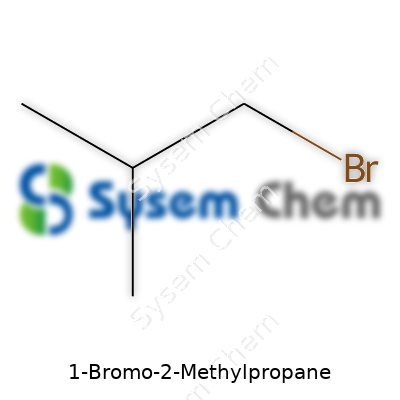
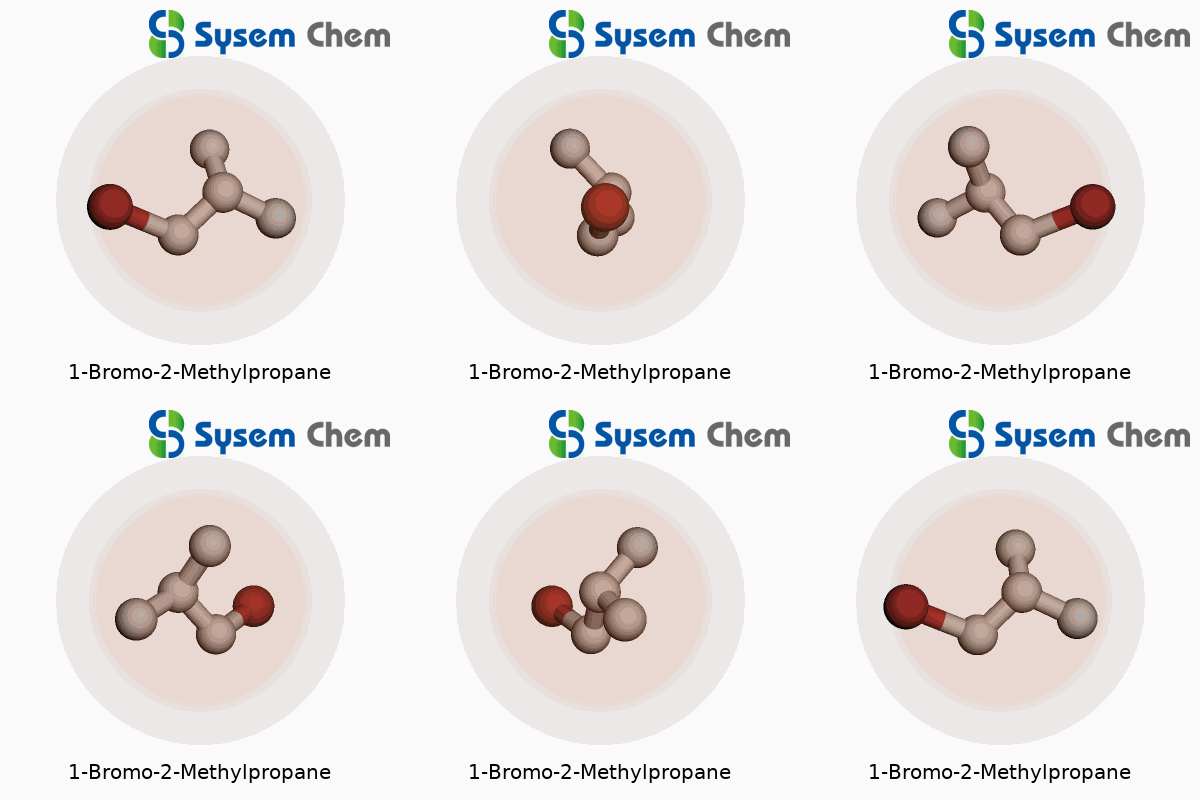
Looking at “1-Bromo-2-Methylpropane,” each part clues you in on how the atoms line up. “Propane” signals a three-carbon backbone, straight and simple. “2-Methyl” tacks a carbon onto the second carbon in that line. “1-Bromo” puts a bromine atom at the very tip, the first carbon. Structurally, the name leaves no loose ends.
Piecing Together the Formula
Chemistry can seem like a language of its own, but formulas break down to counting atoms precisely. Propane itself (C3H8) stretches out into three carbons with hydrogens filling empty hands. Swap out a hydrogen on carbon one for a bromine, and pack on that extra methyl group (CH3) on carbon two. Hydrogens drop off and shift as new groups attach, but the math is honest.
Think of the backbone: Carbon one bonds with bromine, two hydrogens, and carbon two. Carbon two links to carbon one, carbon three, a methyl group, and one hydrogen. Carbon three attaches back to carbon two and secures three hydrogens. Summing up: Four carbons, nine hydrogens, and one bromine — C4H9Br. The skeleton fully built matches up to this formula.
Why Accuracy Matters
Getting this formula right isn’t just an exercise; it decides how a chemist handles the substance and plans reactions. Even a small change in atom placement can flip a molecule from useful solvent to hazardous material. Chemists rely on names and formulas to order, store, transport, and, most of all, not mix up reactive chemicals. If you label something wrong, lab safety ends up at risk, regulatory paperwork gets messy, and research stalls.
ChemIDplus and the PubChem database spell out 1-Bromo-2-Methylpropane as C4H9Br, and other trusted resources agree. The trustworthiness of chemical databases comes from constant cross-checks by industry, academics, and regulators worldwide. Mistakes might sneak in elsewhere, but major registries update quickly as corrections surface.
The Broader Impact of Naming Rules
IUPAC naming sticks for a reason. Mistakes in labeling—whether in a high school lab or an industrial plant—open the door to confusion, delayed results, and injuries. Learning to trust and apply these rules means safer science, smoother supply chains, and clearer communication across countries. In my own work, clarity in names and formulas avoids the 3 AM realization that a chemical was ordered under a local name, not the universally accepted one, wasting weeks of research time.
Issues and Fixes in Real-World Labs
Supply chains for chemicals sometimes tangle when distributors list alternate names or formulas. Common practice demands everyone in procurement and the lab double-checks registry numbers, not just the names. Training lab technicians and warehouse teams to recognize and respect the structure behind a formula prevents errors, and building a procedure around double-checking every shipment with reliable sources like Sigma-Aldrich and chemical registration numbers keeps outcomes dependable. Before barrels roll into a factory, quality control teams, not just buyers, confirm exact matches for every material on the shipment.
Smart Practices Going Forward
Reinforce chemistry fundamentals starting in school, not just for students bound for labs, but for anyone handling products day to day. Open access to trusted chemical databases reduces mistakes and builds transparency for everyone involved. Through clear naming and steady fact-checking, science keeps progressing and hazards shrink to a minimum. In my experience, a few minutes spent confirming the chemical’s identity can protect months of work—and the safety of anyone nearby.
Understanding This Chemical in Everyday Context
1-Bromo-2-methylpropane is not a compound that gets much public attention, but its presence can be felt in many areas of research and production. This colorless, sweet-smelling liquid takes part in projects across labs and factories, supporting everything from pharmaceuticals to advanced material synthesis. My own time in undergraduate chemistry gave me an early introduction to this molecule—in those days, it played a role in nearly every organic synthesis module we tackled.
Organic Synthesis and the Grignard Reaction
One of the main places you’ll find 1-Bromo-2-methylpropane at work is in the preparation of Grignard reagents. Students and lab workers know this step well: add the bromoalkane to magnesium in dry ether, and out comes a reactive organomagnesium compound ready to create new carbon-carbon bonds. These reactions give rise to more complex molecules, which often end up as part of drugs, agrochemicals, or even specialty plastics. The role of this substrate stands out because the branching in its structure often steers reactions toward particular products, making it valuable for those targeting specific molecular arrangements.
Building Blocks for the Pharmaceutical Industry
Medicinal chemists look for small, manageable building blocks to construct larger, bioactive compounds. 1-Bromo-2-methylpropane, by donating a four-carbon structure with a branching point, finds its way into molecules where a bulky group offers some advantage. I worked briefly in a lab where research focused on developing enzyme inhibitors, and the addition of a tert-butyl group, which often stems from this very bromoalkane, provided increased selectivity and metabolic stability in some drug candidates. This chemical acts like a scaffold in the hands of those who want to try out new molecular arrangements and seek better outcomes in the struggle against disease.
Alkylation Jobs in Research and Industry
Alkylation describes a process chemists use to add carbon groups onto a molecule, and 1-Bromo-2-methylpropane delivers its isobutyl group reliably. The bromine atom, easily replaced, encourages scientists to use it in the creation of ethers or other alkylated derivatives. In my own experience, colleges source small quantities for teaching students about substitution. In larger quantities, companies put it to use making surfactants and chemical intermediates for more advanced manufacturing.
Safety and Handling
Most people who work with this compound respect its hazards. Even a lab veteran can forget, but all it takes is a small spill and the weirdly sweet aroma hits—reminding you of its volatility and toxicity. Anyone using it drills into the routines of lab coats, gloves, goggles, and fume hoods. Agencies like OSHA and the European Chemicals Agency keep close tabs on exposure limits, and companies that blend or rebottle this material usually invest in good ventilation and safety training for staff. I remember repeated safety briefings that drilled home just how seriously the risks needed to be taken.
Moving Toward Safer and Greener Chemistry
Green chemistry has begun pulling research in new directions. Academic groups look for less hazardous alternatives, or tweak classic reactions to reduce waste and dangers. My own classes spent time exploring greener solvents and alternatives. Manufacturers considering the future weigh the health and environmental impact at every step, seeking solutions that protect both workers and the wider community.
Understanding the Risks
Working with chemicals like 1-Bromo-2-Methylpropane turns the average day at the lab into serious business. Known for its role in organic synthesis, this compound doesn't just bring along convenience—it brings hazards, especially for skin, eyes, and your lungs. Getting a splash on your fingers or a whiff of its vapor can mean irritation or much worse if you ignore basic steps.
Personal Protective Equipment Isn’t Optional
A good set of gloves, tight-fitting goggles, and a lab coat stand between you and a trip to the emergency room. Nitrile gloves do a solid job with this chemical, outlasting regular latex. Don't skip the eye protection—a face shield can really help if splashing seems possible. Closed-toed shoes keep spills from turning a slip into a visit to the campus health center. The simple act of buttoning your coat and pulling on gloves might add a minute to your setup, but it only takes a second for a spill to happen.
Ventilation Keeps Everyone Safe
Fume hoods aren’t just for show. I’ve seen the difference on days I worked in tight spaces without one—the fumes hang heavy, and nobody wants to trade their afternoon for a coughing fit. 1-Bromo-2-Methylpropane evaporates easily, so its vapors spread before you notice. Working inside a hood, or at least with windows cracked and fans moving the air, helps pull any vapors away before you breathe them.
Spill Response Needs a Clear Plan
In my lab, we kept a cleanup kit close by: absorbent pads, a small box of sand, and a sealed pail for waste. An accident can make anyone panic, but knowing exactly where that stuff sits calms nerves fast. Small spills get covered in absorbent and swept up carefully—no rushing, no spreading the mess wider. Used materials go into clearly marked hazardous waste containers, never into the regular trash. After a spill, the clean area gets wiped down with soap and water for good measure.
Handling and Storage Make a Big Difference
Keep this chemical in sealed bottles, out of direct sunlight and away from heat sources. At my old lab, these bottles lived in a locked cabinet with a spill tray underneath, just in case something leaked. Clear, readable labels prevent accidents at the end of a long day. Storing the chemical far from acids, strong bases, and oxidizers saves everyone from dangerous surprises. Every so often, check the container for cracks or build-up around the lid—these little checks prevented more than one close call for me.
Training, Not Just Paperwork
I sat through plenty of safety trainings early on, some better than others. When trainers actually showed real scenarios, and let folks practice glove removal and eye washing, it made safety feel less like a box to tick and more like a way to get home unharmed. Labs do best when everyone talks openly about near-misses and best practices, so mistakes get fixed before they become incidents. Safety data sheets belong on-hand—not buried in a drawer somewhere.
Personal Responsibility Protects the Whole Team
Working with dangerous chemicals means watching out for yourself and your coworkers. Strong habits—wearing the right gear, labeling bottles, using the hood—send everyone home healthy. Trust between teammates grows each time someone speaks up before a shortcut leads to an emergency. Experience shapes safer processes, but respect for the chemical and for each other keeps close calls from turning into injuries.
Looking at the Numbers
1-Bromo-2-methylpropane isn’t just another name tucked away in a textbook. Ask anyone who’s spent time in a chemistry lab—every number in a chemical equation really does matter. The molecular weight of 1-Bromo-2-methylpropane comes out to about 137.02 g/mol. That value pops up every time someone in a lab needs to mix, react, purify, or measure this compound. Take bromine’s atomic weight (about 79.9), toss in three carbons (12.01 each), seven hydrogens (1.008 each), and it adds up right there. Accuracy with these numbers determines not just the success of small experiments, but also how industrial chemistry operates on a huge scale.
Behind the Calculation: Precision in Everyday Chemistry
The formula for 1-Bromo-2-methylpropane, C4H9Br, looks simple on paper. In practice, getting the math right prevents ruined batches and wasted hours. I remember one summer working in an undergraduate research lab, watching my mentor double-check every calculation because a pipette filled with the wrong amount doesn’t forgive mistakes. Taking shortcuts isn’t an option. If a chemist uses the wrong molecular weight, the end product turns out as something else. For specialists making pharmaceutical intermediates, even a slight error means compromised medicine, product recalls, or customer health risks. Relying on precise molecular weights has always meant better trust, safer science, and fewer red faces in review meetings.
Quality and Purity: Not Just Buzzwords
High-purity 1-Bromo-2-methylpropane starts with reliable calculations. Researchers weigh out this compound to prepare solutions, run reactions, and build bigger molecules. Consistency matters both for patent work and for keeping research results repeatable. In real-world manufacturing, these molecular weights guide bulk ordering from chemical suppliers. No one wants to discover an ingredient shortage in the middle of production because of bad math on an order form.
The Role in Synthesis and Real-World Applications
1-Bromo-2-methylpropane sees regular use in organic synthesis, especially for forming new carbon-carbon bonds. Its reliability comes straight from chemists knowing its mass down to the decimal. Pharmaceutical companies depend on molecular weights for formulating medicines. In environmental testing, proper measurement ensures that hazardous residues get tracked accurately. These aren’t theoretical concerns—one laboratory slip could throw off a drug synthesis, spark environmental issues, or lead to lost revenue. Numbers become more than trivia once spreadsheets and supply chains get involved.
Keeping Mistakes Out: Best Practices
Solid practice means double-checking values with modern chemical databases or trusted supply catalogs. Even though software now does these calculations faster than any research student ever could on scratch paper, it’s still easy to trip up with a typo. My years in academic and industry settings remind me: seasoned chemists always revisit their numbers before moving forward, especially with critical reagents like 1-Bromo-2-methylpropane. Open collaboration with peers and using verified references helps keep everyone on the same page.
Solutions for the Future
Manufacturers and labs keep raising quality control standards for raw materials. Blockchain for chemical supply chains, transparent audits, and AI-powered checks are making mixes more reliable. Education on the fundamentals—from high school through grad school—remains the strongest line of defense against errors. As the world keeps asking for safer, higher-performing products, pinpoint accuracy around these molecular weights isn’t negotiable.
Understand the Hazards
I’ve worked in several labs and small manufacturing spaces, and it never surprises me how often people underestimate chemicals with names most folks can’t pronounce. 1-Bromo-2-Methylpropane falls into the category of organic halides. It stands out as both a flammable liquid and a potential source of toxic fumes. In plain terms: you don’t want this stuff spilling, you don’t want to inhale it, and you never want it near open flame or heat sources.
Pick the Right Storage Spot
Storage for this chemical isn’t complicated if you follow some basic facts. Don’t just stash bottles on a random shelf. Use a cool, dry spot with plenty of ventilation. A flammable storage cabinet, preferably made of metal and grounded against static electricity, offers solid protection. Keep the temperature steady — don’t pick a spot where daylight might warm it up, especially in summer when storerooms get oven-like by noon.
Keep It Isolated
I’ve seen short-sighted practices where someone just lines up bottles by size or color. That’s asking for trouble. 1-Bromo-2-Methylpropane reacts badly if it ends up near oxidizing agents. Separate this chemical from anything with peroxide or nitric acid, as these can turn a regular workday into an emergency in seconds.
Alcohols, amines, and alkalis also belong far from its shelf. Strong organizational habits go a long way: label every shelf, use color-coded stickers, and train everyone who handles chemicals to respect these zones. This isn’t about red tape — this prevents real disasters.
Stick with Tight Seals
Experienced hands in the lab know the value of checking bottle caps and closures before leaving for the day. 1-Bromo-2-Methylpropane evaporates easily and its vapors carry both a fire risk and a health risk. Tighten every lid after use. Choose threaded caps over stoppers; leaks cost money and peace of mind. If you spot a cracked bottle or a lid that won’t seal, transfer the liquid to a new, labelled container without delay.
Personal Safety Comes First
No one in chemistry escapes an accident-free career if they ignore protective equipment. Wear gloves and splash-resistant goggles even just opening the bottle. Long sleeves help, even if it’s uncomfortable. If you catch a whiff of anything stronger than a faint, sweet smell, check your ventilation. This chemical irritates eyes and lungs with fumes, and quick action skips trips to the emergency room.
Regular Housekeeping
The best-run spaces run simple, scheduled checks. Once a week, walk the shelves and check every chemical for crusty residue or film around the cap, inspect labels, and verify logs. This habit saved my old team more than once. Dispose of small residues by following hazardous waste procedures — never pour leftovers down a sink or toss them with regular trash.
Building a Safety Culture
Good storage never works if it’s one person’s job while everyone else ignores the basics. Share information about the dangers of 1-Bromo-2-Methylpropane, post reminders about proper storage, and talk openly about mistakes anyone makes. If someone uncovers a bad practice, fix it immediately—no one gets blamed, but nobody shrugs it off either.
Safety with chemicals like this comes down to steady discipline and real respect for what you’re working with. In every lab or workshop, smart storage and responsible habits keep everyone safe and operations running smoothly.